








REF

References

  1. Cooper, I.D. (2016). “Evidence ladder and the journal of the medical library association,” Journal of the Medical Library Association, 104(4), p. 262.
  2. Parazzini, F., Cantarutti, A. and Esposito, G. (2025). “Unmasking the risk: clinical trials versus real-world evidence on dydrogesterone and birth defects,” Human Reproduction Open, 2025(1).
  3. Henry, A. et al. (2025). “Birth defects reporting and the use of dydrogesterone: a disproportionality analysis from the World Health Organization pharmacovigilance database (VigiBase),” Human Reproduction Open, 2025(1).
  4. Uppsala Monitoring Centre (2021). “Guideline for using VigiBase data in studies,” Version 4, March 15, 2021.
  5. Henry, A. et al. (2023). “0-150 Birth defects reporting and the use of oral dydrogesterone in assisted reproductive technology: a global pharmacovigilance study,” Human Reproduction, 38(Supplement_1).
  6. Luke, B. et al. (2021). “The risk of birth defects with conception by ART,” Human Reproduction (Oxford, England), 36(1), pp. 116–129.
  7. Pethő, B. et al. (2023). “Maternal age is highly associated with non-chromosomal congenital anomalies: Analysis of a population-based case-control database,” BJOG: An International Journal of Obstetrics and Gynaecology, 130(10), pp. 1217–1225.
  8. Khoury, M.J. and Erickson, J.D. (1993). “Recurrent pregnancy loss as an indicator for increased risk of birth defects: a population-based case-control study,” Paediatric and Perinatal Epidemiology, 7(4), pp. 404–416.

References

  1. Baker, V.L. et al. (2010). “Multivariate analysis of factors affecting probability of pregnancy and live birth with in vitro fertilization: An analysis of the Society for Assisted Reproductive Technology Clinic Outcomes Reporting System,” Fertility and Sterility, 94(4), pp. 1410–1416.
  2. Podzolkova, N. et al. (2016). “Dydrogesterone treatment for menstrual-cycle regularization in routine clinical practice: A multicenter observational study,” Gynecological Endocrinology, 32(3), pp. 246–249.
  3. 29th Periodic Safety Update Report: Dydrogesterone (22 APR 2021 – 21 APR 2024).
  4. Griesinger, G. et al. (2020). “Dydrogesterone as an oral alternative to vaginal progesterone for IVF luteal phase support: A systematic review and individual participant data meta-analysis,” PLOS ONE, 15(11), e0241044.
  5. Katalinic, A. et al. (2022). “A critical appraisal of safety data on dydrogesterone for the support of early pregnancy: a scoping review and meta-analysis,” Reproductive BioMedicine Online, 45(2), pp. 365–373.
  6. Katalinic, A. et al. (2024). “No additional risk of congenital anomalies after first-trimester dydrogesterone use: a systematic review and meta-analysis,” Human Reproduction Open, 2024(1).
  7. Chan, D.M.K. et al. (2016). “A randomized double-blind controlled trial of the use of dydrogesterone in women with threatened miscarriage in the first trimester: study protocol for a randomized controlled trial,” Trials, 17(1), p. 408.

References

  1. Tournaye, H. et al. (2017). “A Phase III randomized controlled trial comparing the efficacy, safety and tolerability of oral dydrogesterone versus micronized vaginal progesterone for luteal support in in vitro fertilization,” Human Reproduction, 32(5), pp. 1019–1027.
  2. Griesinger, G., Blockeel, C., Sukhikh, G.T., et al. (2018). “Oral dydrogesterone versus intravaginal micronized progesterone gel for luteal phase support in IVF: a randomized clinical trial,” Human Reproduction, 33(12), pp. 2212–2221.
  3. Yang, D.Z. et al. (2020). “A Phase III randomized controlled trial of oral dydrogesterone versus intravaginal progesterone gel for luteal phase support in in vitro fertilization (Lotus II): results from the Chinese mainland subpopulation,” Gynecological Endocrinology, 36(2), pp. 175–183.
  4. Li, L. et al. (2024). “The maternal drug exposure birth cohort (DEBC) in China,” Nature Communications, 15(1), pp. 1–14.
  5. Zaquout, M. et al. (2015). “The Impact of Oral Intake of Dydrogesterone on Fetal Heart Development During Early Pregnancy,” Pediatric Cardiology, 36(7), pp. 1483–1488.

Evaluating Dydrogesterone Safety Evidence:
A Review of Henry et al. (2025)

circle

CLINICAL DECISIONS ARE BUILT ON

LAYERS OF

EVIDENCE

Not All

EVIDENCE

IS CREATED EQUAL

IN SCIENTIFIC PRACTICE,

THE QUALITY AND TYPE OF EVIDENCE ARE AS CRITICAL AS THE DATA ITSELF

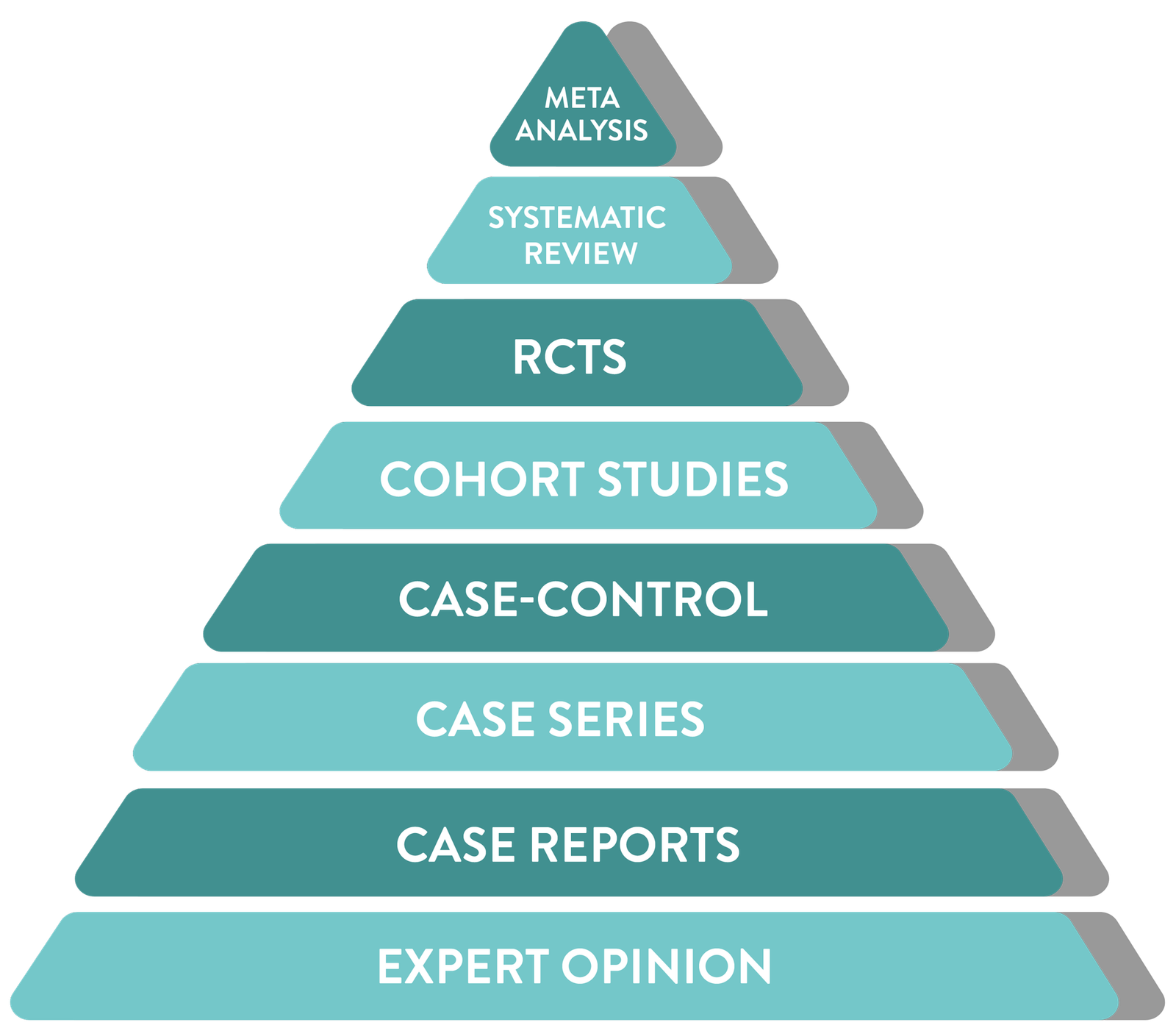
From individual case reports to large-scale meta-analyses, each successive level of study design increases confidence, robustness, and reliability

Incorporation of all available data with non-critical bias

Meta
Analysis

Statistically combines data from multiple studies

Systematic
Review

Summarizes all relevant studies on a topic

RCTs

Randomized trial comparing interventions, often to a control or placebo group

Cohort Studies

Follows groups over time to assess outcomes

Case-Control

Compares patients with a condition to those without

Case Series

Summary of similar cases in multiple patients

Case Reports

Detailed report on a single patient

Expert Opinion

Insights based on clinical experience rather than research

tri-arrow

Henry et al. 2025 analysis of data until 20213

Hover your mouse over the pyramid to explore the hierarchy of scientific evidence.

where does a

pharmacovigilance signal fit in?

a pharmacovigilance signal

is a prompt for inquiry, not a conclusion

these studies can help to:

Identify signals of rare or unexpected side effects

Detect the severity and prevalence of adverse events

Provide monitoring of medicines

Indicate patterns – but they cannot establish cause and effect

circle

but what if a new pharmacovigilance study

raises concerns?

where does it fit in and
how should it impact

clinical decisions?

a pharmacovigilance study is a useful early-warning tool,
but it does not constitute
conclusive evidence

Especially when compared to the extensive high-quality evidence that supports a drug’s efficacy and effectiveness within evidence-based medicine
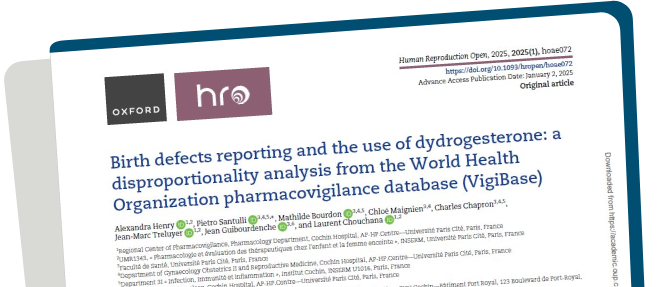
In January 2025, Henry et al., published a pharmacovigilance study in Human Reproduction Open that reported an increased number of birth defects associated with dydrogesterone³

KEY CONSIDERATIONS
OF THIS STUDY³

This was a pharmacovigilance (PV) study that used the PV database VigiBase

VigiBase is a WHO global database of reported potential side-effects of medicinal products⁴

It used VigiBase reports of birth defects that may have been related to drugs commonly used during assisted reproductive technologies (ARTs), including dydrogesterone

VigiBase provides reporting rates, not risk estimates, so it doesn’t show whether a reported event was caused by the medicine⁴

The key finding?³
A 5.4x HIGHER
REPORTING ODDS RATIO (ROR)
for birth defects when compared to progesterone

The most frequently reported birth defects:
isolated hypospadias and congenital heart defects (CHD)

But before drawing conclusions, we must ask:

What type of study is this?

How is the ROR calculated and what does it represent?

Can we compare it to actual clinical outcomes?

Without careful evaluation of these factors,
there is a risk of misinterpreting what the data truly indicates

It’s not about how many cases – it’s about how many per report

What is the

REPORTING ODDS RATIO

(ROR)?

The ROR is not a

clinical risk metric,

nor does it assess the

probability

of an event occuring

Instead, it reflects how frequently a specific adverse event (AE) is reported for one drug relative to another

Why is there such a big difference?

Number of AE reports for Drug A

Number of AE reports for Drug B

What information does this rely on?

Sounds

Simple

Right

The ROR is
HIGHLY DEPENDENT on the
QUALITY and VOLUME
10
of the supporting data
10

FACTORS THAT CAN AFFECT
QUALITY INCLUDE:

Lack of CRITICAL DETAILS e.g., Co-medications

Reporting BIAS & SOURCE QUALITY

DATA QUALITY PROCESSES e.g., Poor follow-up

FACTORS THAT CAN AFFECT
VOLUME INCLUDE:

UNDER-REPORTING and/or OVER-REPORTING

EXTERNAL INFLUENCES e.g., Media coverage

INFRASTRUCTURE e.g., Reporting tools

Henry et al., 20253

DYDROGESTERONE

60 birth defects out of 145

(total dydrogesterone individual case safety reports)

41%

PROGESTERONE

141 birth defects out of 1,222

(total progesterone individual case safety reports)

11.5%

Dydrogesterone appears to have a HIGHER PROPORTION OF BIRTH DEFECT REPORTS –

primarily because fewer other adverse events were recorded

Henry et al., 20253

60 birth defects vs 141
DYDROGESTERONE 60 of 145
individual case safety reports included birth defects
PROGESTERONE
141 of 1222
individual case safety reports included birth defects
41%
11.5%

It’s not about how many cases – it’s about how many per report.

Let's investigate together!

Edit the numbers in the table to see how this changes the ROR

BIRTH DEFECT ANY OTHER AE
Dydrogesterone
a
b
Other ART use (clomiphene, letrozole, GnRHa, Gns etc.)
c
d
ROR:
Values update immediately as you type. The formula at right remains as a reference; only the calculated ROR changes dynamically.

A high ROR does not confirm that a drug is dangerous, it indicates a signal,
shown by an increased number of reported events for a specific outcome

Impact of non-case count on ROR3

Reporting Odds Ratio (ROR)
Impact of non-case count on ROR
Number of non-cases in Progesterone arm

If the number of non-cases grow disproportionately, especially from unrelated events, they can artificially inflate the ROR and make the signal appear stronger.

This is due to shifts in background reporting rather than a true association between the drug and event.

There are two reasons

THIS STUDY
DOESN’T STACK UP

Let’s look at why, despite following pharmacovigilance procedures, THIS STUDY FALLS SHORT ON CLINICAL RELEVANCE3

No acknowledgement of
clinical variables that
increase the risk of foetal
abnormalities in woman
undergoing ART5

SINGLETON OR
MULTIPLE BIRTH6

MATERNAL
AGE7

NUMBER OF PREVIOUS MISCARRIDGES8

ART CYCLE TYPE AND PROTOCOL9

MATERNAL AGE7

NUMBER OF PREVIOUS MISCARRIDGES8

ART CYCLE TYPE
AND PROTOCOL9

MATERNAL
AGE7

NUMBER OF PREVIOUS MISCARRIDGES8

ART CYCLE TYPE
AND PROTOCOL9

No considerations of
whether AE’s were
considered to be
specifically drug-related4

No mention of the
year the adverse
event was reported4


Dydrogesterone individual case safety reports3

Progesterone individual case safety reports3

68
Congenital, familial and genetic disorders
181
2
Foetal disorders
68
6
Neonatal disorders
133
1
Lactation related topics
10
9
Normal preganancy conditions and outcomes
173
88
Pregnancy, labor and delivery complications
683
32
Termination of pregnancy and risk of abortion
400

SKEWED RATIO FROM MISSING DATA

Dydrogesterone individual case safety reports3

145

Progesterone individual case safety reports3

1222

WHEN COMPARED WITH OVER

30,000,000 INDIVIDUAL
CASE SAFETY REPORTS

IN THE VIGIBASE DATABASE4

THE FULL PICTURE:

DYDROGESTERONE
IN CONTEXT

FOR OVER 65 YEARS,


DYDROGESTERONE
has supported women through
EARLY PREGNANCY, IVF, and MISCARRIAGES10

More than 20 million pregnancies
reported with dydrogesterone11

  • Dydrogesterone approved countries10

More than 147 million women worldwide have been exposed to dydrogesterone11

MANY HIGH-QUALITY STUDIES SUPPORT THE USE OF DYDROGESTERONE

Meta
Analysis

Griesinger et al. 202012
Katalinic et al. 202213
Katalinic et al. 202414

Systematic
Review

Griesinger et al. 202012
Katalinic et al. 202213
Katalinic et al. 202414

RCTs

Chan et al. 201615
Tournaye et al. 201716
Griesinger et al. 201817
Yang et al. 202018

Cohort Studies

Li et al. 202419

Case-Control

Zaqout et al. 201520

Case Series
Case Reports
Expert Opinion
tri-arrow
  • Publisher data corroborating the safety profile of dydrogesterone
  • Publisher data associating dydrogesterone with congenital malformations

Hover your mouse over the pyramid and click to explore studies which support the use of dydrogesterone

DOES THE NEW PHARMACOVIGILANCE DATABASE

OVERRIDE ALL OF THIS?

circle

SCIENCE SHOULD GUIDE,

not unnecessarily alarm

EVIDENCE-DRIVEN
CARE

SENSATION DRIVEN MESSAGE

DATA DOES
NOT EXIST

When misinterpreted,
it doesn’t just confuse,
it can cause real harm

WHEN A COMPLEX SIGNAL IS
REDUCED TO A SINGLE STATEMENT:

“This observational analysis based on global safety data
showed an increased reporting of birth defects”3

  • 01 Vulnerable patients can panic
  • 02Healthcare professionals lose confidence
  • 03Effective, well-tolerated treatments may be unfairly sidelined
  • 04Patients are deprived of an essential treatment

Let’s be clear:

KEY TAKEAWAYS FOR CLINICIANS

THIS ISN’T ABOUT
SILENCING SIGNALS

It’s about ensuring they’re interpreted responsibly

Our responsibility isn't just to the data,
it's to the women the data affects

The Reporting Odds Ratio (ROR) ≠ Clinical Risk

ROR reflects reporting patterns, not probability, risk or causality

Pharmacovigilance ≠ Clinical Study

The data is uncontrolled and lacks patient context

The Weight of Evidence Supports Dydrogesterone’s Safety

20 million pregnancies
exposed to dydrogesterone

Many meta-analyses
and RCTs

65+ years of clinical use

Misinterpreting Signals Can Harm Patient Care

Some women rely on oral progestogens like dydrogesterone

Let’s not allow fear to override years of evidence which supports the safety of dydrogesterone

SCIENCE INFORMS THROUGH CONSENSUS, NOT SENSATIONALISED INDIVIDUAL STUDIES

Let’s ensure we are asking the right questions
before coming to conclusions